
For decades, the default answer to temporary site power was simple. Bring in diesel, run extension lines, tolerate the noise, manage the fuel, and treat temporary energy as a cost of doing business.
That model is starting to break.
Across construction, infrastructure delivery, mining support, dewatering operations, metal fabrication, and remote industrial projects, the pressure is shifting from “how do we get any power on site?” to “how do we get reliable, scalable power without locking the project into fuel logistics, noise exposure, and delayed deployment?” Battery-based site energy is moving into that gap, and the shift is no longer theoretical. Battery systems are already being deployed on construction sites as practical alternatives to diesel-heavy temporary power, with industry case studies showing materially lower noise and faster deployment. The UK Green Building Council cites a construction battery system that can replace most large diesel generators, be installed in under two hours, and operate at roughly 32 times quieter than a diesel generator. In parallel, the UK’s Construction Leadership Council has set a route map target to cut diesel use on construction sites by 78 percent by 2035, which signals that the market is moving from pilot projects to operational transition.
That matters even more in heavy-duty environments, where power demand does not come from one tool. It comes from stacked, simultaneous loads. On a serious project site, temporary energy is often carrying electric concrete mixers, rebar bending equipment, industrial compressors, welding systems, dewatering pumps, floodlighting, ventilation fans, charging points, and small site-office systems at the same time. A compact electric mixer can work with a 1,500W running requirement, but rebar bending machines are commonly specified at 3 kW to 4 kW on 380V three-phase supply, industrial piston air compressors can sit at 7.5 kW on 380V, and portable dewatering pumps frequently run in a 1.1 kW to 7.5 kW band, with job-site panels supporting pumps up to 11 kW and beyond. Heavy welding equipment pushes the profile higher still. Miller and ESAB industrial welding systems are commonly specified on 3-phase input in the 380V to 575V range for high-output construction and fabrication work.
This is exactly why three-phase matters. Schneider Electric notes that three-phase systems are typically used for larger loads, from roughly 10 kW upward into the megawatt range, because that architecture is built for higher-power applications. On real job sites, that translates into a very practical truth. If your temporary power strategy cannot handle 380V three-phase loads, then it is not solving for the heavy industrial layer of the project. It is solving only for the edge of the site. The real demand sits deeper, in fabrication, pumping, compaction, processing, and equipment support. A healthy three-phase network also supports more reliable machine operation and helps protect equipment from poor operating conditions, which becomes particularly relevant on remote or unstable sites where power quality is not a small issue.
That is where mobile battery power starts to become structurally interesting.
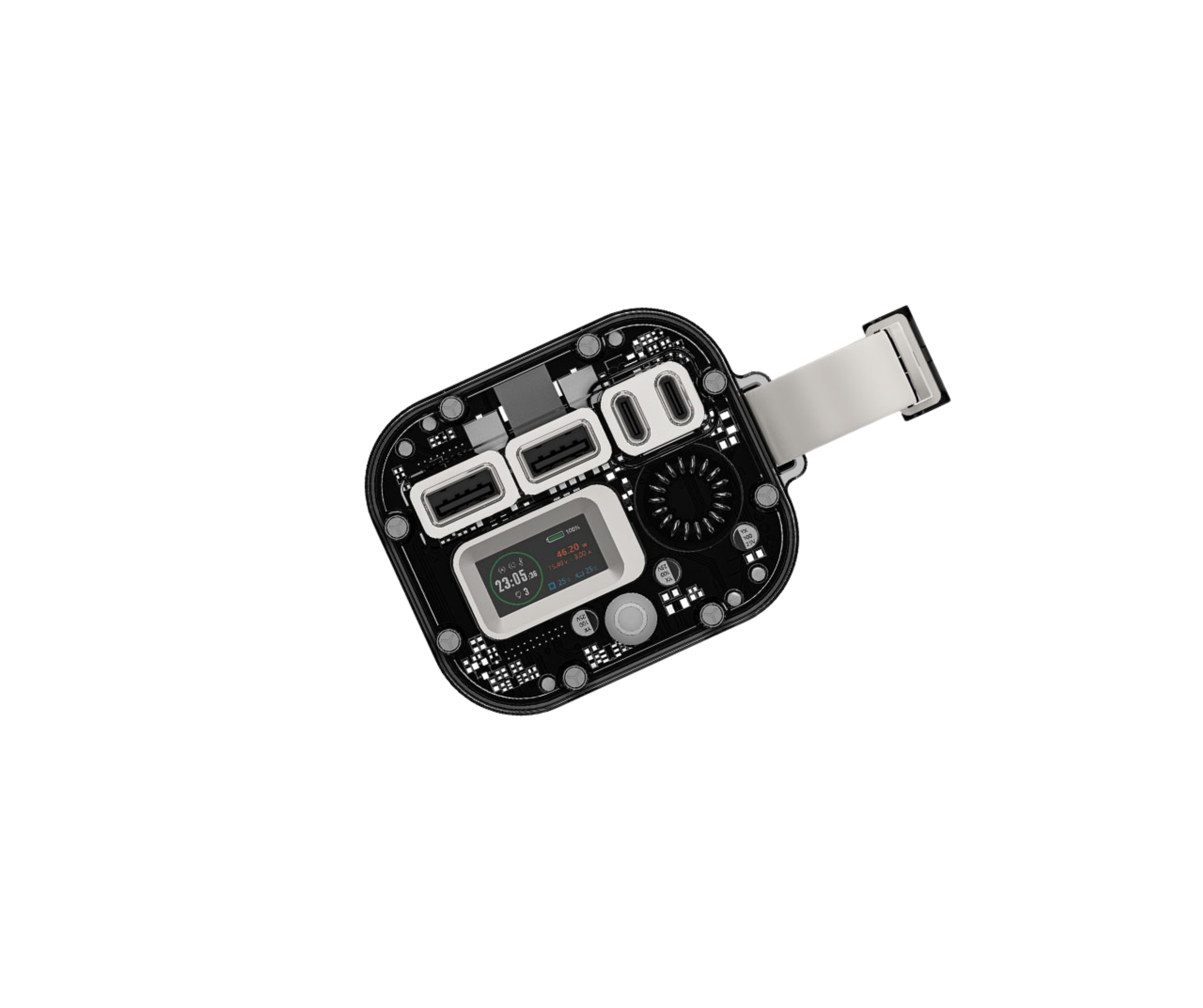
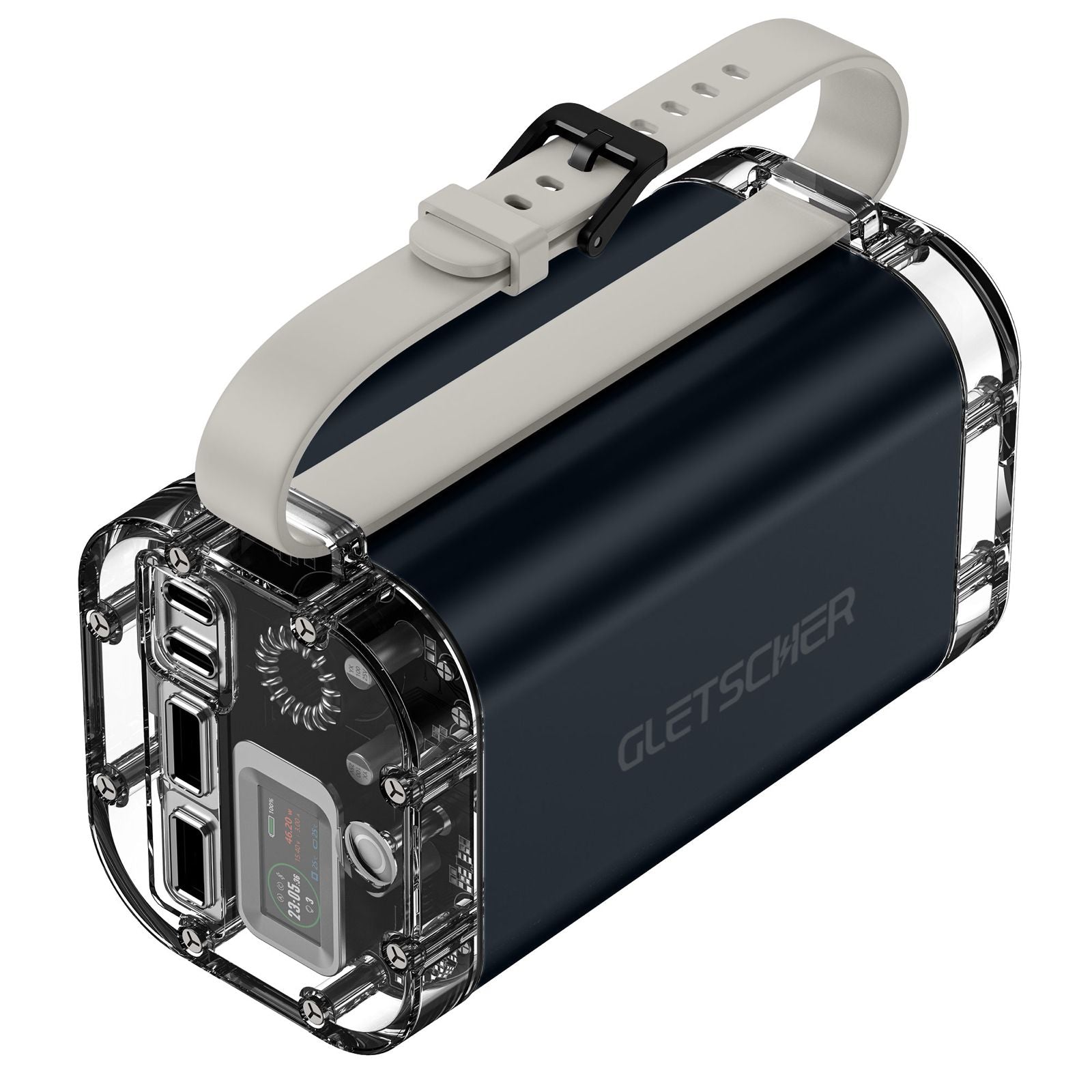
This upcoming high-capacity enterprise unit under the Camper Elite Powerstation series is positioned at the top end of Gletscher Energy’s current portable enterprise portfolio. The platform is specified at 13,500W rated output, 27,000W peak output, 16.076kWh rated energy capacity, and 380V AC output, with LFP battery chemistry, pure sine wave output, IP54 protection, noise below 45 dB(A), up to 12,000W AC input, and PV input listed as 125V to 430V, 3600W x 3. Charging time is shown at about 2 hours on AC and 2.5 hours on PV, which places the unit in a very different category from lifestyle powerstations or light backup devices. This is not a camp battery with better branding. This is temporary industrial energy equipment.
The strategic value of a product like this is not only that it replaces a diesel generator in principle. It is that it can change how project teams think about sequencing. A 380V mobile battery system with 13.5 kW continuous output can sit much closer to the workfront and support heavy-duty electric loads without the same dependence on fuel deliveries, idling losses, generator servicing, and site-wide acoustic impact. For projects where the workfront moves, that mobility matters. For urban projects where noise matters, the sub-45 dB profile matters. For industrial environments where power quality matters, the pure sine wave and three-phase output matter. For remote operations where fuel logistics are slow, risky, or expensive, the operating model matters even more.
The economics behind this shift are becoming harder to ignore. In one data center construction case study, deploying mobile battery energy storage alongside a generator reduced generator runtime from 24 hours per day to just 3 hours per day, while fuel costs fell by 87 percent over the month studied. Separate industry material from Connected Energy argues that diesel generators are becoming increasingly expensive and problematic in industrial areas with outdated grid infrastructure, while battery energy storage offers lower long-term operating cost, improved safety, and more flexible deployment. Those cases do not prove that every diesel unit disappears overnight. They do show that once battery systems enter the temporary-power stack, diesel often shifts from “default primary power” to “backup, recharge, or exception layer.” That is a very different operating logic.
For heavy industry, this shift is especially relevant in four scenarios.
First, dewatering and civil works.
Large infrastructure projects often depend on pumps before they depend on almost anything else. Excavation, trenching, foundations, and utility corridors can all be constrained by water management. Three-phase dewatering pumps commonly reach well beyond small single-phase loads, and site control panels are routinely sized for pumps up to 11 kW. That means temporary power is not a side issue. It is directly tied to whether the site can progress. A high-capacity mobile battery unit can sit closer to the pumping zone, reduce generator relocations, and lower idle-heavy runtime on pump support operations.
Second, steel and rebar processing.
On reinforced concrete projects, rebar cutting and bending are not optional support functions. They are daily throughput tasks. Machines in the 3 kW to 4 kW range on 380V three-phase power are common, and that means site energy planning has to account for repetitive, production-oriented electrical demand rather than occasional tool charging. Mobile 3-phase battery systems become useful here because they support energy closer to fabrication points and reduce the friction of extending fixed temporary infrastructure before the project is ready for it.
Third, welding and metal fabrication.
Large-site welding does not tolerate weak temporary power. Industrial welders from major manufacturers such as Miller and ESAB are built around three-phase input and high-duty-cycle output for serious fabrication and repair work. When site teams are building steel frames, repairing structural members, or handling industrial assembly, temporary power must be stable, dense, and industrial-grade. This is where portable three-phase battery systems stop being “nice to have” and start becoming a credible part of the field-power architecture.
Fourth, compressors, mixers, and support loads.
The overlooked reality on large sites is that the medium-size loads add up quickly. Compressors, mixers, lights, ventilation, instrument charging, survey gear, communications, and temporary office systems all sit below the headline heavy machine, but together they shape the runtime profile of temporary power. That is exactly where diesel tends to become inefficient, because generators are often oversized for flexibility and then left running below optimal utilization. Construction Products Association case material points out that battery systems behave differently from generators and must be managed properly, but it also reinforces the role of telematics and load visibility in reducing unnecessary runtime and emissions. In other words, the next-generation site-power problem is not just capacity. It is load management.
This is why the phrase “construction without fuel dependency” is more than a sustainability slogan. It is really an operating model. Fuel dependency creates a chain. Fuel procurement, fuel transport, safe storage, refueling windows, maintenance intervals, acoustic treatment, and idle losses all sit inside that chain. Mobile battery power breaks part of that chain. Not all of it, not instantly, and not on every project. But enough of it to change project economics, workforce conditions, and deployment speed.
For Gletscher Energy, that is the real positioning opportunity.
The market does not need another portable power message built around convenience. It needs a message built around industrial site readiness. A 13.5 kW, 380V, three-phase, high-capacity mobile powerstation under the Camper Elite series should not be marketed as a product that “can be used for construction.” That undersells it badly. It should be positioned as a field-deployable energy asset for heavy-duty job sites where power density, mobility, lower noise, and reduced fuel reliance can materially improve execution.
That positioning becomes even stronger because the category itself is gaining momentum. Major OEMs such as John Deere are publicly framing construction electrification around not only machines, but also jobsite infrastructure and charging support. Industry analysis and OEM case studies increasingly point in the same direction. Electrification in construction is moving beyond pilot messaging and into procurement logic, especially where urban restrictions, power quality, operating cost, and emissions pressure are all moving in the same direction.
The bigger point is simple.
Temporary power used to be treated as background. On heavy construction and industrial projects, it is becoming a strategic layer. The teams that solve it faster will mobilize faster, fabricate sooner, pump earlier, weld more reliably, and carry fewer fuel-related constraints into the field. That is why the future of site energy is not just off-grid. It is mobile, higher-density, lower-noise, and increasingly three-phase.
And that is exactly where Gletscher Energy can play a more serious role.
With the upcoming top-end Camper Elite enterprise platform, the conversation should not start with “portable powerstation.” It should start with a sharper question:
How much heavy work can a site move forward when energy no longer has to wait for fixed infrastructure or fuel?