Saudi, UAE, Oman: Who Is Building the Gulf’s Most Investable Solar Future?
For years, the Gulf’s solar narrative was dominated by scale. The biggest tender. The largest park. The boldest national target. In 2026, that is n...
 Gletscher Energy
Gletscher Energy
Gletscher Energy
Low-maintenance self-cleaning solar power for homes in remote, dusty, or grid-limited environments

Standalone solar-plus-storage systems where maintenance access may be infrequent and battery recharge consistency matters.
Residential systems designed to support critical circuits during outages while minimizing ongoing cleaning burden.
Homes that may sit partially unattended and benefit from more passive surface-cleaning behavior.
Residential areas near open land, construction, coastal sand, or desert-edge exposure where rooftop dust is persistent.

We believe residential self-cleaning solar will increasingly move toward a combination of product-level anti-dust engineering and system-level design discipline. The strongest home systems will not depend on a miracle coating alone. They will combine better glass behavior, smarter frame design, better tilt choices, and stronger integration with storage-backed home energy planning.
A residential user usually notices solar performance only when the battery drains earlier, backup availability feels weaker, or expected bill savings do not fully appear. That makes anti-soiling behavior more important in homes than it first seems. In practical terms, module glass texture, coating choice, frame geometry, and water runoff behavior all influence how quickly a residential array begins to underperform between cleaning cycles.
China’s leading module suppliers are increasingly engineering dust mitigation directly into product structure. LONGi’s Hi-MO X10 Anti-Dust Pro, for example, was launched specifically for dust-prone and desert conditions and uses dust-free glass together with a short-edge frame design without an A-surface to reduce dust and snow accumulation while improving light capture. That is important because it shows the industry is moving from simple “cleaning advice” toward physical anti-dust design.
One of the most overlooked residential issues is roof angle. Modules mounted too flat may lose much of the passive self-cleaning benefit that homeowners assume they have. Trina’s published guidance is unusually direct on this point: modules installed horizontally or near-flat require more frequent cleaning because they do not benefit from the same self-cleaning effect seen at moderate tilt. For homeowners, this means the right system is not only the right module. It is also the right tilt, array arrangement, and roof integration strategy.
On a grid-connected home, a dusty panel mainly reduces yield. On an off-grid or hybrid home, it also affects battery recharge quality and therefore nighttime energy confidence. The cleaner-energy value of self-cleaning design is therefore amplified in storage-backed residential systems. In other words, a more maintenance-light array does not only protect daytime generation. It helps protect the usefulness of the battery system attached to it.
Residential solar succeeds more often when it looks intentional. Homeowners are more likely to keep a system long-term when it feels integrated into the house rather than bolted onto it. That makes slim framing, cleaner surface appearance, controlled dust build-up, and visually quieter system design more relevant than they would be in large industrial projects.
A self-cleaning solar solution for homes is a residential solar power system designed to reduce the performance loss and maintenance burden associated with dust, sand, and surface contamination. It may include self-cleaning panel surfaces, cleaning-assist technologies, optimized mounting design, or reduced-maintenance engineering for residential environments.
In dusty climates such as the Middle East, rooftop solar performance can be affected by sand, dust deposition, humidity-related residue, and infrequent maintenance. Self-cleaning or reduced-soiling design helps improve long-term energy yield, reduce cleaning frequency, and support better homeowner ROI.
No. Self-cleaning solar reduces maintenance burden, but it does not eliminate all maintenance needs. Homes still require periodic inspection, electrical checks, performance monitoring, and in some cases surface cleaning depending on roof conditions, surrounding pollution, and environmental exposure.
The main benefits include better yield retention, lower maintenance frequency, more stable performance between cleaning cycles, better suitability for remote or infrequently serviced homes, and improved lifecycle value in dusty environments.
This solution is particularly relevant for villas, remote homes, second homes, farms with residential loads, properties in dusty zones, and homeowners seeking lower-maintenance solar systems for off-grid or hybrid residential energy use.

For years, the Gulf’s solar narrative was dominated by scale. The biggest tender. The largest park. The boldest national target. In 2026, that is n...

Energy in the Middle East has never been defined by scarcity. The region operates on one of the most resource-rich energy foundations globally, sup...

Desert conditions demand more than efficiency—they demand durability. Explore how structural engineering innovations are helping solar systems with...
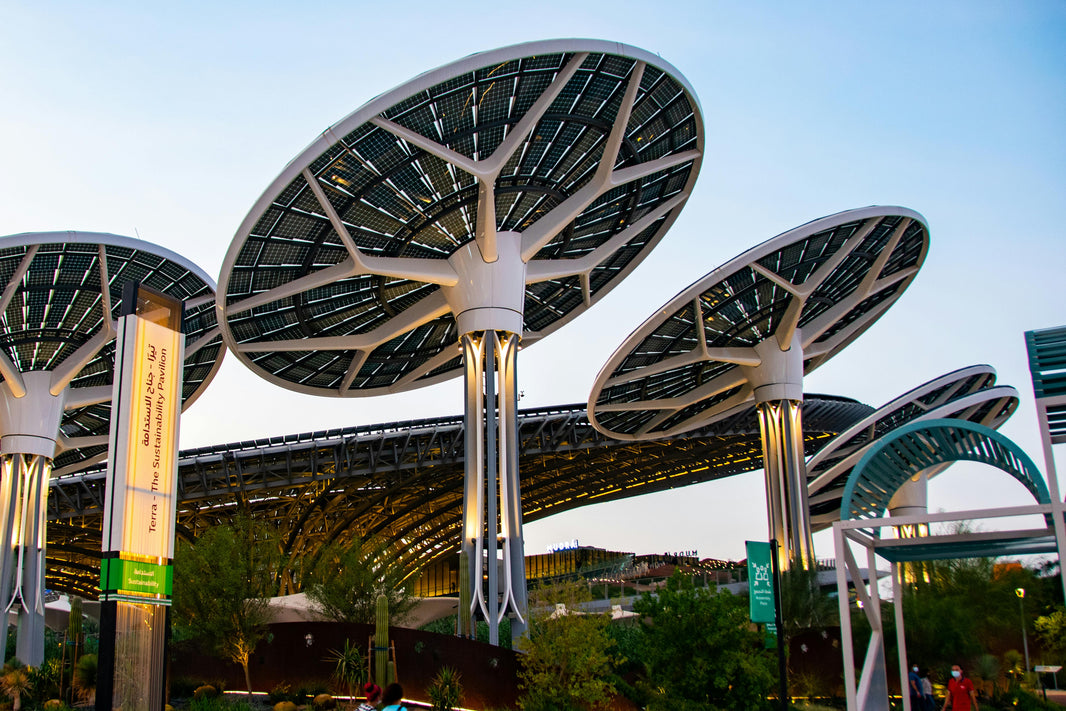
As net metering fades across the GCC, commercial solar ROI is being reshaped by hybrid storage, PPAs, and smarter grid strategies. Here’s what you ...

As global solar capacity soars, the next frontier is circular sustainability. This blog explores cutting-edge solar recycling innovations and how G...

As the solar energy sector accelerates in 2025, designing scalable, future-proof infrastructure has never been more critical. This blog explores ke...