Public EV Infrastructure in the Middle East and Africa: Beyond Charger Count
EV in the Middle East and Africa is entering a more serious phase. For several years, much of the public conversation around EV infrastructure focu...
 Gletscher Energy
Gletscher Energy
Gletscher Energy
Self-cleaning solar-plus-storage for business sites, compounds, clinics, and remote commercial operations

Off-grid or weak-grid solar systems where uptime and low-maintenance operation directly affect daily service reliability.
Self-cleaning PV for controlled-access commercial sites that want lower cleaning frequency and stronger continuity.
Solar systems where visual cleanliness, lower service disruption, and more stable battery-backed performance all matter.
Standalone or hybrid solar systems for shops, stations, or service nodes where fuel and cleaning logistics create recurring cost.

We approach this category as a question of commercial asset performance. The goal is not simply to make the panels look cleaner. It is to reduce the performance volatility and maintenance burden that weaken the business case for commercial off-grid or hybrid solar. That means making better decisions at the level of module selection, surface behavior, roof layout, maintenance planning, and storage integration.
Commercial solar owners rarely care about coatings in isolation. They care about truck rolls, safety access, cleaning labor, and how long the system can remain commercially acceptable between maintenance interventions. That is why self-cleaning in this segment should be discussed as part of the O&M model, not only as a material science feature.
China’s current self-cleaning research is increasingly sophisticated. The market is no longer only talking about “water-repellent glass.” It is also studying superhydrophilic inorganic nano-coatings, moth-eye-inspired anti-reflection and sand-removal structures, omniphobic transparent polyurethane coatings, and self-healing wetting surfaces designed to retain performance longer under real environmental exposure. Chinese-led and China-linked research in 2024–2026 reflects exactly this direction.
A rooftop clinic, compound, retail branch, logistics office, or façade-integrated solar skin should not be judged with the same cleaning assumptions as an open utility field. Commercial sites often have:
That is why anti-soiling material choice and layout logic matter more in this segment than many developers initially assume.
For some commercial and building-integrated environments, water-based cleaning is either expensive, inconvenient, or undesirable. This is where the wider technology direction becomes interesting. Recent technical reviews identify electrostatic cleaning as one of the most promising approaches for BIPV and urban PV environments because it avoids the dependency on regular water access and manual rooftop intervention.
This is not yet a universal commercial standard, but it is exactly the sort of technology direction commercial clients should be watching.
On a commercial site with battery storage, panel cleanliness affects not only total generation but also charging completeness, site autonomy, and backup readiness. That makes lower-maintenance surface performance more economically meaningful in businesses than in pure grid-export projects where battery behavior is not part of the equation.
A commercial self-cleaning solar solution is a solar energy system designed for offices, warehouses, retail sites, clinics, schools, compounds, hospitality assets, and other commercial buildings where dust accumulation and maintenance access affect long-term solar performance.
Commercial facilities often have larger roof areas, tighter maintenance schedules, and greater cost sensitivity around system downtime or cleaning logistics. Self-cleaning solar helps reduce O&M intensity, preserve energy yield, and improve the practicality of rooftop solar in dusty and hard-to-access environments.
This solution is useful for logistics facilities, warehouses, retail buildings, hospitality properties, healthcare facilities, office campuses, educational institutions, and industrial-commercial compounds with significant roof area and high daytime power consumption.
It can improve ROI by preserving output consistency, reducing labor or water use associated with cleaning, lowering performance losses caused by soiling, and helping maintain a more stable production profile over time, especially in regions with persistent dust exposure.
They should assess roof access, contamination profile, expected soiling rate, cleaning cost, coating performance, mounting arrangement, drainage behavior, maintenance interval, and how the solar system integrates with wider facility power management and business continuity needs.

EV in the Middle East and Africa is entering a more serious phase. For several years, much of the public conversation around EV infrastructure focu...

The Middle East does not have a shortage of interest in vertical farming. It has a shortage of commercially disciplined vertical farming design. Th...

For years, vertical farming and aquaponics in the Middle East have been discussed as interesting agriculture concepts. That framing is already outd...

For most of the solar industry’s modern history, photovoltaic panels have been treated as add-ons. They sat on roofs, over car parks, or in utility...

The Middle East’s renewable energy transition is no longer just a story of ambition. It is now being measured in hard infrastructure terms: gigawat...

Not all infrastructure is measured the same way. Some assets are judged by how fast they move. Others by how many people they serve. Others by how ...

AI is expanding the scale of digital infrastructure faster than traditional power systems were designed to absorb. In 2025, electricity demand from...
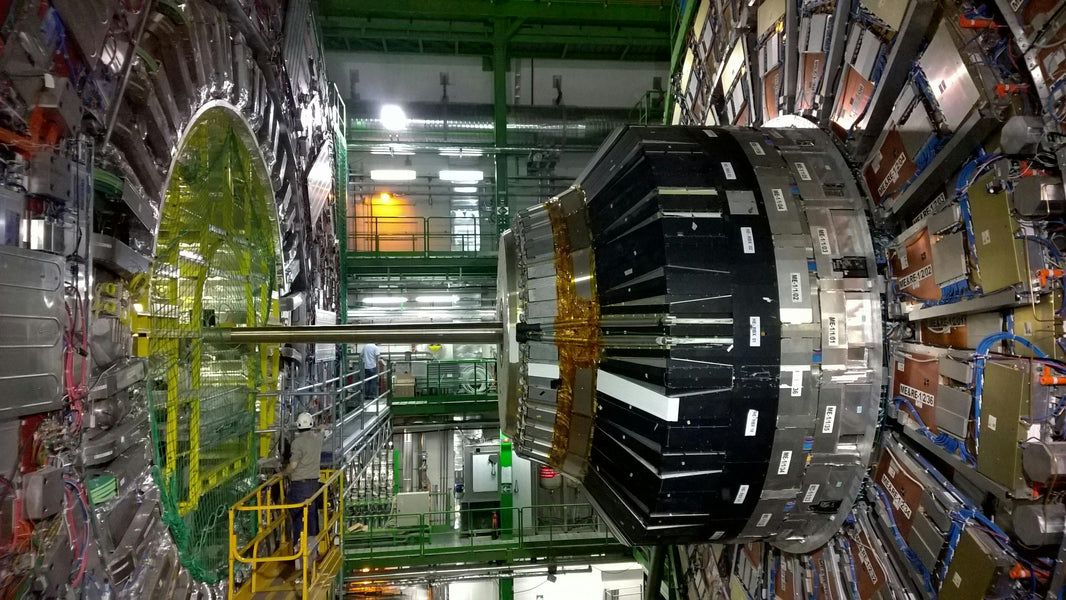
As AI workloads, HPC clusters, and mission-critical systems become central to research and governance across the Middle East and Africa, the demand...

The GCC’s bold shift toward electric mobility is accelerating, but building EV charging infrastructure that withstands intense heat, sandstorms, an...