
Camping and RV living have evolved far beyond basic outdoor experiences. What was once defined by minimalism and disconnection is now increasingly shaped by mobility, comfort, and continuous access to energy. Whether it is a weekend camping trip or full-time RV living, modern users are essentially recreating a small, portable home that must function reliably in environments without grid access.
The key challenge is not simply having a power source, but understanding how much power is actually required to support real-life usage. Most people underestimate their energy needs because they evaluate devices individually rather than considering how they operate together throughout the day. In reality, mobile living is defined by overlapping loads, peak demand moments, and continuous baseline consumption.
Understanding Mobile Living Power Demand
In a mobile environment, energy usage can be broken down into three functional layers. First, there is the continuous base load, which includes devices that run throughout the day such as fridges, lighting, and connectivity systems. Second, there are intermittent lifestyle loads, including cooking appliances and personal electronics that operate at specific times. Finally, there are high-demand peak loads, which occur when appliances such as induction cookers or air conditioning systems are used.
The complexity of mobile energy consumption lies in the fact that these layers do not operate independently. They overlap. A fridge does not stop running when you start cooking, and your devices do not stop charging when climate systems are active. This stacking effect is what defines the true power requirement.
Typical Power Consumption of Camping and RV Equipment
The following table outlines the most common equipment used in camping and RV living scenarios, along with their typical power consumption ranges. These values reflect realistic usage rather than theoretical minimums.
Daily Essentials and Continuous Loads
|
Equipment |
Typical Power (W) |
Usage Pattern |
|---|---|---|
|
Portable Fridge |
40W – 80W (120W surge) |
Continuous cycling |
|
LED Lighting |
5W – 20W |
Evening/night |
|
WiFi / Starlink |
50W – 100W |
Continuous |
|
Ventilation Fan |
20W – 60W |
Continuous/intermittent |
|
Phone Charging |
10W – 20W |
Intermittent |
Typical baseline consumption ranges between 100W and 300W, which remains active for extended periods.
Work, Connectivity, and Digital Lifestyle
|
Equipment |
Typical Power (W) |
Usage Pattern |
|---|---|---|
|
Laptop |
60W – 100W |
Several hours daily |
|
Camera / Drone Charging |
20W – 100W |
Intermittent |
|
Portable Monitor |
30W – 80W |
Work sessions |
|
Content Lighting |
30W – 150W |
Intermittent |
For users working remotely or creating content, an additional 100W to 300W load is typically introduced during active periods.
Cooking and Lifestyle Appliances
|
Equipment |
Typical Power (W) |
Usage Pattern |
|---|---|---|
|
Electric Kettle |
1000W – 1500W |
Short bursts |
|
Coffee Machine |
800W – 1400W |
Daily |
|
Induction Cooker |
1200W – 2000W |
Meal preparation |
|
Microwave |
800W – 1200W |
Intermittent |
Cooking appliances represent the most significant jump in power demand, often exceeding the total of all other devices combined during operation.
Climate Control and Comfort Systems
|
Equipment |
Typical Power (W) |
Usage Pattern |
|---|---|---|
|
Portable Fan |
20W – 60W |
Continuous |
|
Electric Blanket |
50W – 150W |
Night use |
|
Portable AC |
800W – 2000W |
Extended use |
|
Electric Heater |
500W – 1500W |
Seasonal |
Climate systems are often the largest contributor to sustained high power consumption, especially in extreme environments.
Utility and Supporting Equipment
|
Equipment |
Typical Power (W) |
Usage Pattern |
|---|---|---|
|
Water Pump |
60W – 200W |
Intermittent |
|
Air Pump |
100W – 300W |
Short bursts |
|
Portable Shower |
100W – 500W |
Intermittent |
While individually moderate, these devices contribute to overall system load when used alongside other equipment.
Real-Life Load Scenario: What Happens in Practice
To understand actual demand, it is important to look at how these devices operate together rather than in isolation.
A typical evening setup may include a running fridge, lighting, a charging laptop, a ventilation fan, and an induction cooker in use. In this scenario, the continuous load may sit around 150W to 300W, while the total demand during cooking can rise to 1500W to 2000W or more.
This is the point where many portable power solutions fail, not because they lack total capacity, but because they cannot sustain simultaneous load requirements or handle peak demand effectively.
Power Requirements by Lifestyle Type
Different levels of mobile living require fundamentally different power system capabilities.
Light Camping (Short Trips, Minimal Setup)
|
Requirement |
Range |
|---|---|
|
Continuous Load |
100W – 300W |
|
Peak Load |
<500W |
This level focuses on portability and basic functionality, making compact systems sufficient.
Standard RV Travel and Extended Camping
|
Requirement |
Range |
|---|---|
|
Continuous Load |
300W – 800W |
|
Peak Load |
1000W – 2000W |
This represents the most common use case, where users require reliable support for cooking, work, and daily living without compromise.
Full-Time RV Living and High-Comfort Setup
|
Requirement |
Range |
|---|---|
|
Continuous Load |
500W – 1500W |
|
Peak Load |
2000W – 5000W+ |
At this level, the energy system must behave like a stable infrastructure rather than a backup solution.
How Gletscher Energy Systems Fit into Mobile Living
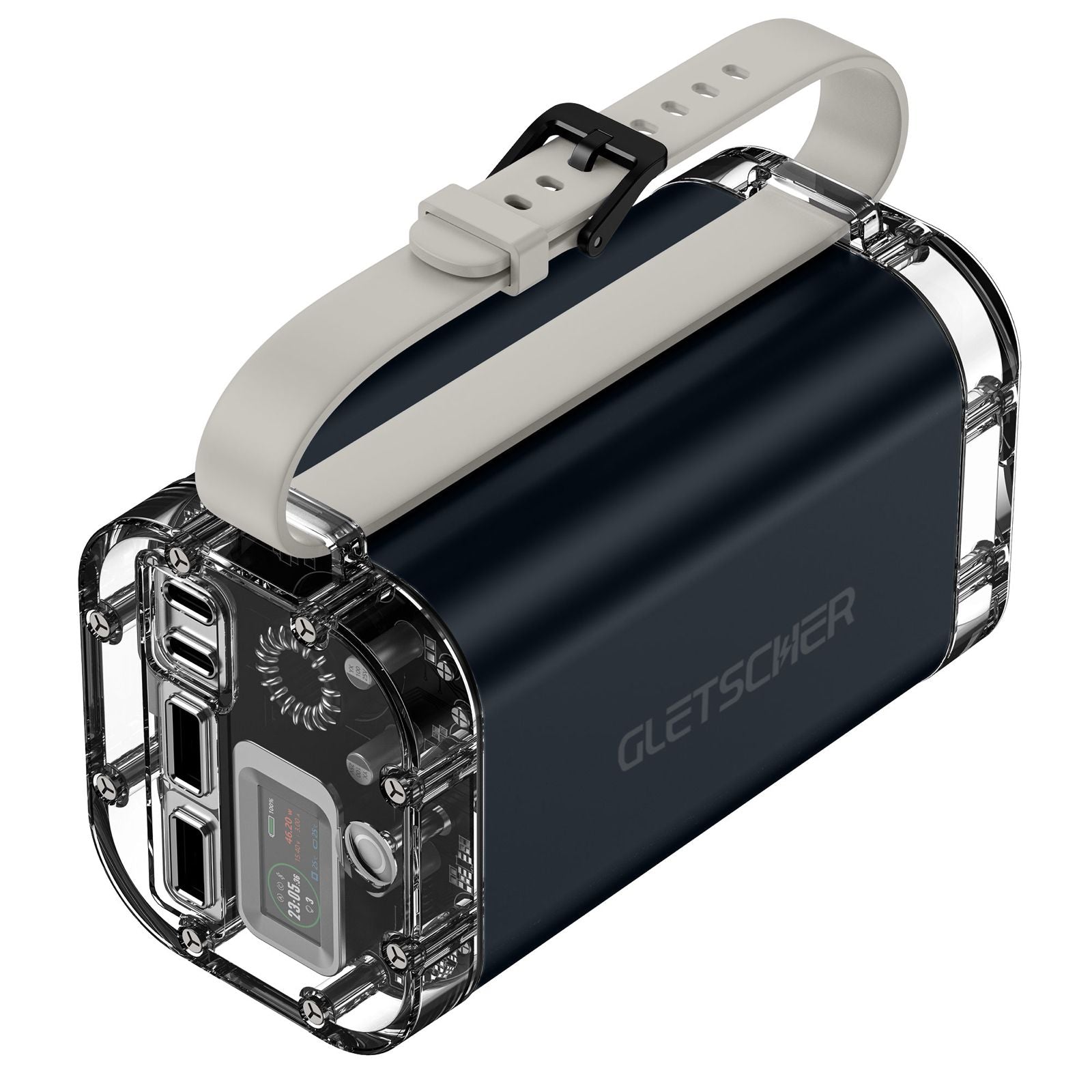
The Camper series is designed to align with these real-world usage tiers rather than theoretical specifications.
-
Camper Pico is optimized for lightweight, portable energy needs such as personal electronics and basic lighting, making it suitable for short-term camping scenarios.
-
Camper Pro supports mid-range loads including cooking appliances, work setups, and continuous daily usage, providing a balanced system for most RV travelers.
-
Camper Elite systems are engineered for high-demand environments where stability, scalability, and peak load handling are critical. Based on industrial specifications, these systems deliver multi-kilowatt output, peak power capabilities reaching up to 18,000W, and scalable energy storage in the multi-kWh range, allowing them to support full-time mobile living without performance compromise .
Rethinking Mobile Power
The most common misconception in camping and RV living is that energy requirements can be simplified to battery size alone. In reality, the effectiveness of a power system depends on its ability to handle continuous load, peak demand, and overlapping usage without forcing the user to constantly manage or limit their consumption.
Mobile living is no longer about reducing usage. It is about enabling flexibility while maintaining reliability.
Conclusion
Camping and RV living today are defined by mobility without compromise. The ability to cook, work, stay connected, and remain comfortable depends entirely on how well the energy system is designed to support real-life behavior rather than ideal scenarios.
Understanding power consumption is the first step. Choosing a system that aligns with that reality is what ultimately defines the experience.
Because the difference between a smooth journey and a frustrating one is rarely the destination. It is whether your power system can keep up with how you actually live.