
In construction, the first constraint is not always labor, steel, or cement. Increasingly, it is power.
Across fast-moving urban developments, remote work zones, and infrastructure corridors under restoration, one reality continues to shape what gets built and how quickly it moves forward: permanent grid access often arrives late, unstable power slows execution, and diesel dependency adds cost, noise, logistics pressure, and operational risk. In regions facing damaged infrastructure or disrupted utilities, that challenge becomes even more visible. Ukraine alone is estimated to require $524 billion in reconstruction and recovery over the next decade, with housing, transport, and energy among the hardest-hit sectors.
This is why construction energy is starting to change.
The market is moving beyond the assumption that temporary power must mean fuel-heavy generators, long refueling chains, and high-noise operation. Around the world, battery-based temporary power systems are gaining traction on construction sites because they can cut diesel use, reduce site emissions and noise, and provide flexible deployment where grid access is delayed or unreliable. Policy and industry momentum in Europe and other markets increasingly points in the same direction: the future of temporary site power is cleaner, quieter, and more modular.
For conflict-affected and infrastructure-stressed regions, this shift matters even more.
When cities are expanding, repairing critical assets, or restoring neighborhoods and public services, work often begins long before the energy environment is fully stabilized. Teams still need to operate cutting tools, drills, lighting systems, communications equipment, pumps, mobile offices, charging stations, and site-control systems. In these environments, power is not just a utility input. It becomes an enabler of continuity. The Gaza and West Bank interim rapid damage and needs assessment, for example, highlights the scale of damage to physical assets, infrastructure, and service delivery, underlining how essential practical, deployable energy access becomes during recovery and reconstruction. Iraq’s electricity sector, meanwhile, remains shaped by long-standing reliability and investment challenges, reinforcing the broader need for flexible power solutions even outside immediate crisis zones.
This is where a new category of enterprise powerstations becomes highly relevant.
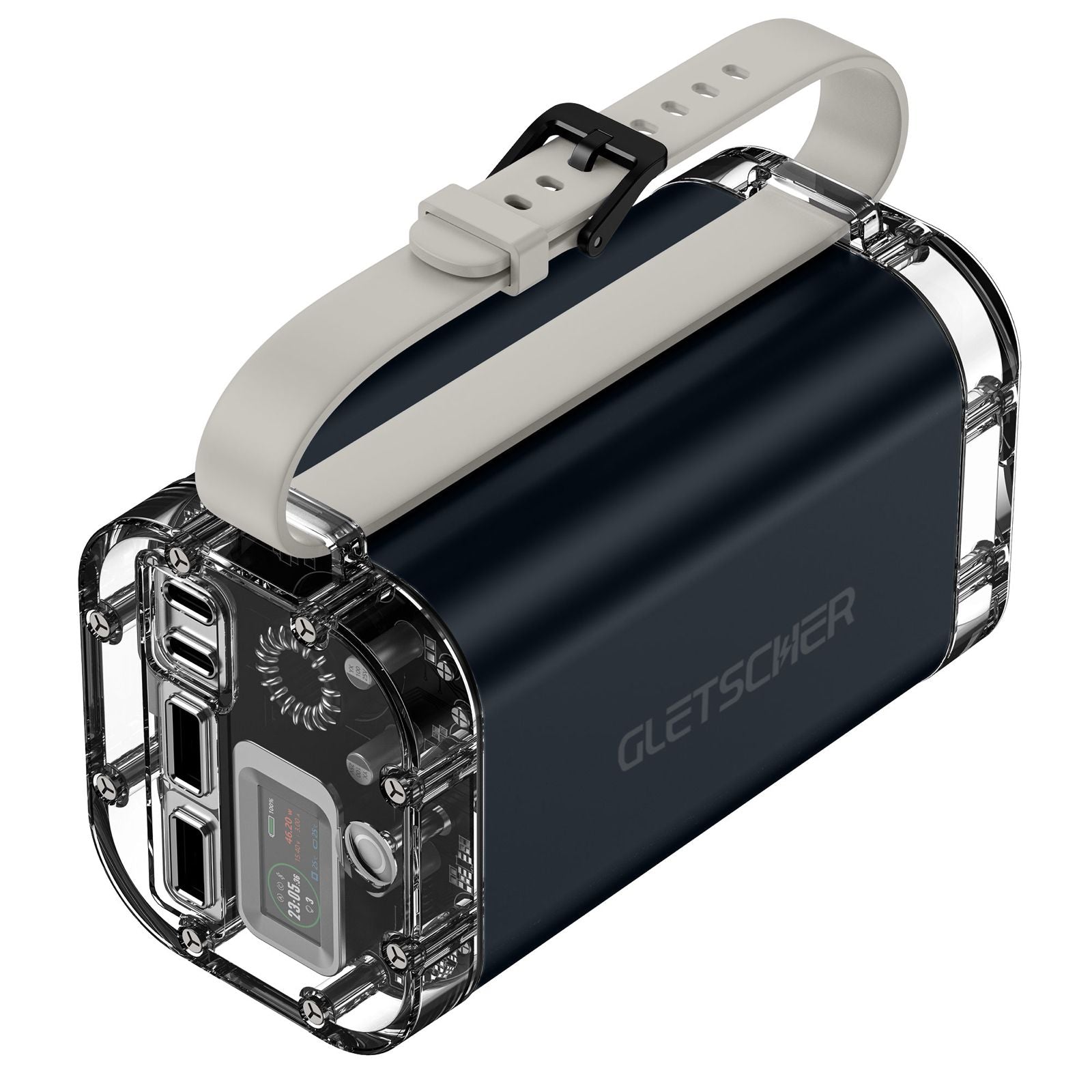
Under Gletscher Energy’s enterprise portfolio, the upcoming Camper Elite Powerstation series is being positioned for exactly these kinds of conditions: environments where work cannot wait for ideal infrastructure. Based on the current product specifications, this 3600W system combines high continuous output with up to 18,000W peak power, LFP battery chemistry, dual-voltage AC compatibility (100V/120V/230V/240V), IP66 protection, pure sine wave output, and low-noise operation below 35dB. In practical terms, that means a platform designed not for lifestyle backup, but for real site use across construction, industrial work, field repair, mobile deployment, and selected emergency charging scenarios.

What makes that especially relevant for rebuilding-oriented applications is not one feature alone, but the combination:
First, mobility.
A system that can be rolled into position and deployed without fuel storage immediately reduces setup complexity on fragmented or early-stage job sites.
Second, resilience in harsh conditions.
IP66-rated protection matters when work continues in dust, light rain, rough site surfaces, and partially exposed environments.
Third, low-noise operation.
Battery-based site power is especially valuable in urban rehabilitation zones, enclosed spaces, and projects near occupied buildings, where diesel noise creates both practical and social friction. Industry deployments elsewhere are already showing that battery systems can deliver meaningful noise reduction compared with diesel alternatives.
Fourth, reduced fuel dependence.
In unstable or hard-to-service environments, every avoided diesel delivery reduces logistics burden. That is not just a sustainability point. It is an execution point.
Fifth, fit for modern electric loads.
Construction is becoming more electrified, from power tools and charging equipment to temporary digital systems. Portable battery power aligns better with that direction than legacy assumptions built around generators alone.
This matters commercially as much as operationally.
The companies that win in reconstruction, rapid urban repair, and high-pressure infrastructure delivery are often the ones that remove friction fastest. Materials matter. Labor matters. Engineering matters. But the ability to provide immediate, quiet, mobile, dependable power can determine whether a team starts work today or waits another week for temporary infrastructure, fuel coordination, or site setup.
In other words, the power conversation is shifting from backup to strategy.
For Gletscher Energy, this creates a stronger positioning opportunity than a standard “green power” narrative. The real story is not that battery powerstations are cleaner, though they are. The real story is that they are becoming part of a more resilient construction model: one that supports urban rebuilding, temporary field deployment, remote execution, and infrastructure continuity without forcing every project to rely on diesel-first logic.
That is particularly relevant in regions where cities are being expanded, repaired, or reactivated under difficult conditions. It is relevant for contractors operating before grid restoration is complete. It is relevant for teams working around damaged infrastructure, power shortages, or unstable service environments. And it is relevant for decision-makers who understand that rebuilding momentum depends on what can be deployed now, not what may arrive later.
The future of construction power will not be defined only by megawatts. It will be defined by speed of deployment, quality of output, operational flexibility, and lower dependence on fragile fuel chains.
That is the gap next-generation enterprise powerstations are built to close.
Power that arrives early can accelerate everything that follows.