Public EV Infrastructure in the Middle East and Africa: Beyond Charger Count
EV in the Middle East and Africa is entering a more serious phase. For several years, much of the public conversation around EV infrastructure focu...
 Gletscher Energy
Gletscher Energy
Gletscher Energy
Solar-integrated vertical farming, horticulture, and aquaponics systems designed to turn energy abundance into food resilience with minimal land and water use.


A controlled farming environment depends on power continuity, environmental control, lighting strategy, water circulation, pumping, monitoring, and backup architecture. That means the quality of the energy layer directly affects crop stability, operational cost, and production reliability.

Controlled environment food systems depend on energy in a more direct way than conventional agriculture. Pumps, nutrient circulation, aeration, LED grow lighting, climate control, filtration, controls, and environmental sensors all need stable operation. In aquaponics especially, the power layer becomes mission-critical because fish health, dissolved oxygen levels, and water circulation cannot tolerate long interruptions. This is one reason the energy architecture should be designed as part of the production system, not added later as backup.
Aquaponics is attractive in the UAE and wider Middle East because it combines plant production and aquaculture in a recirculating system that uses dramatically less water than conventional cultivation. A 2024 UAE University study found aquaponic production delivered water savings exceeding 90% compared with conventional systems, while also showing strong nutrient delivery performance and favorable plant quality outcomes.
That matters because in a region where water security is foundational, food systems that reuse water efficiently are not simply more sustainable. They are more strategically aligned with national constraints.
One of the strongest advantages of vertical farming is not only that it can reduce water use. It can also reduce land intensity by stacking production in controlled environments close to demand. Recent supply-chain analysis notes that vertical farms can achieve 10 to 20 times the yield per acre of conventional field production in certain systems.
For the UAE, where productive land is scarce and urban demand is concentrated, that is highly relevant. The value of vertical farming lies not just in the crop. It lies in the production density per square meter of built environment.
The Middle East has one major structural advantage for controlled food systems: abundant solar resource. That changes the economics of standalone and hybrid production models. In the UAE, the challenge is not a lack of energy potential. It is how to channel that energy into productive systems that reduce import dependence and strengthen local resilience. Gletscher Energy’s role in this category is to help convert solar generation and storage into usable agricultural infrastructure, especially where food-production systems must remain stable even when grid quality is uncertain or energy cost control matters.
A controlled food system should not be sized like a generic building. The power design has to reflect production logic: photoperiod, nutrient-circulation timing, oxygenation requirements, water temperature sensitivity, climate-control cycles, and crop-value density. A lettuce tower, an herb system, and an aquaponic fish-plus-leafy-greens loop do not all create the same electrical profile. Gletscher therefore positions this category as a systems-engineering problem where food biology and energy design need to be planned together.
A controlled environment food system is an integrated agricultural solution combining vertical farming, horticulture, aquaponics, and autonomous energy support to enable food production in resource-constrained environments. It is especially relevant where land use, water efficiency, and power independence are critical.
The UAE and wider Middle East face structural pressure around food security, water efficiency, climate control, and productive land availability. Controlled environment food systems supported by solar and standalone power can help convert energy availability into higher-value food production using less land and more controlled water usage.
Energy design is central because controlled agriculture depends on continuous support for pumps, lighting, sensors, monitoring, environmental controls, circulation systems, and backup continuity. Without stable power, crop conditions, water balance, and production consistency are compromised.
Yes, in certain use cases these systems can be supported by standalone solar, storage, and inverter architecture, especially when designed carefully around real load demand, environmental control strategy, lighting cycles, and water-system continuity. Hybrid grid-assisted models may also be appropriate depending on project scale.
These systems are relevant to government food-security programs, agritech investors, remote communities, hospitality groups, education and research institutions, agricultural developers, sustainability-focused real estate projects, and infrastructure-linked food production initiatives.

EV in the Middle East and Africa is entering a more serious phase. For several years, much of the public conversation around EV infrastructure focu...

The Middle East does not have a shortage of interest in vertical farming. It has a shortage of commercially disciplined vertical farming design. Th...

For years, vertical farming and aquaponics in the Middle East have been discussed as interesting agriculture concepts. That framing is already outd...

For most of the solar industry’s modern history, photovoltaic panels have been treated as add-ons. They sat on roofs, over car parks, or in utility...

The Middle East’s renewable energy transition is no longer just a story of ambition. It is now being measured in hard infrastructure terms: gigawat...

Not all infrastructure is measured the same way. Some assets are judged by how fast they move. Others by how many people they serve. Others by how ...

AI is expanding the scale of digital infrastructure faster than traditional power systems were designed to absorb. In 2025, electricity demand from...
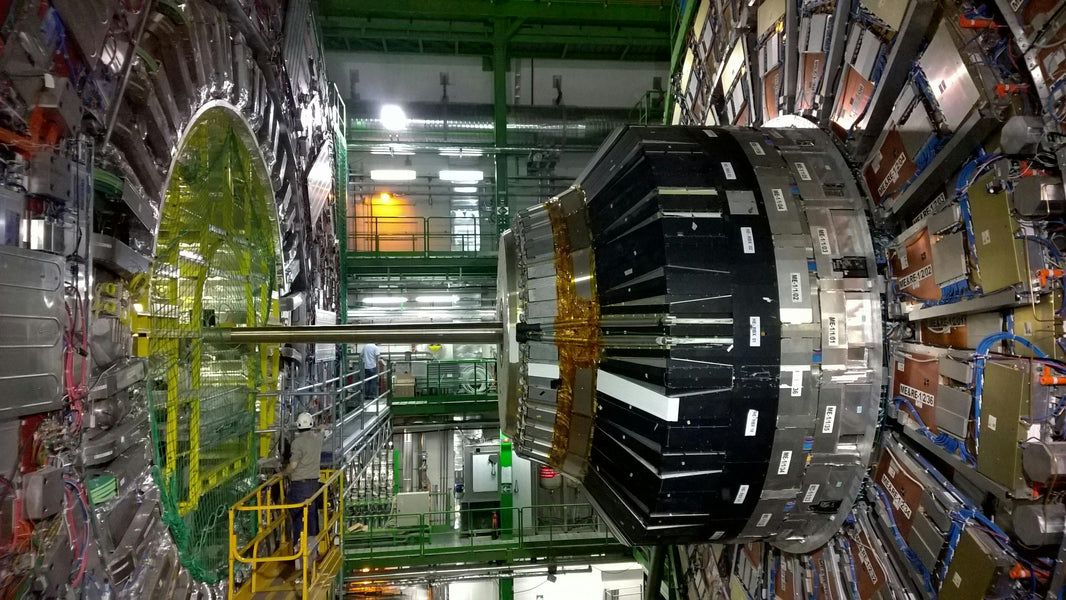
As AI workloads, HPC clusters, and mission-critical systems become central to research and governance across the Middle East and Africa, the demand...

The GCC’s bold shift toward electric mobility is accelerating, but building EV charging infrastructure that withstands intense heat, sandstorms, an...